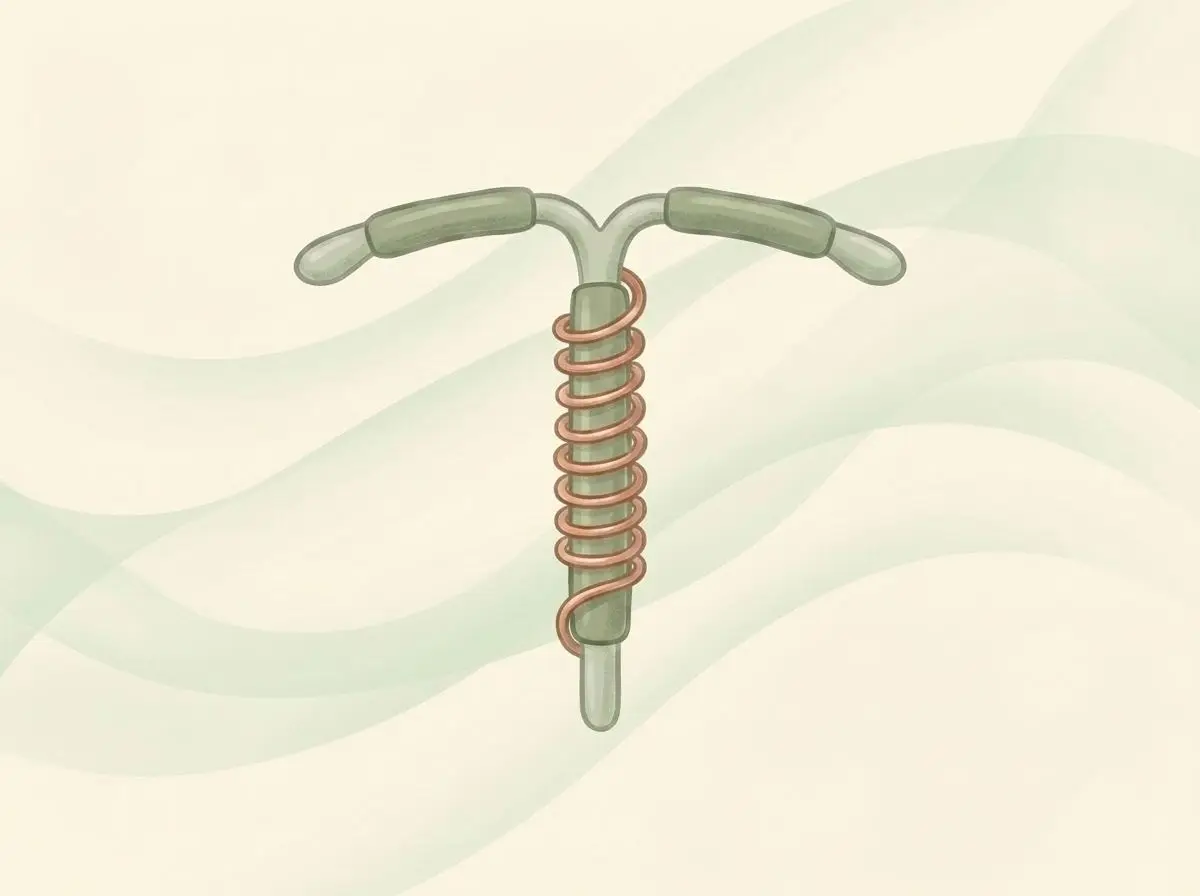
How it works
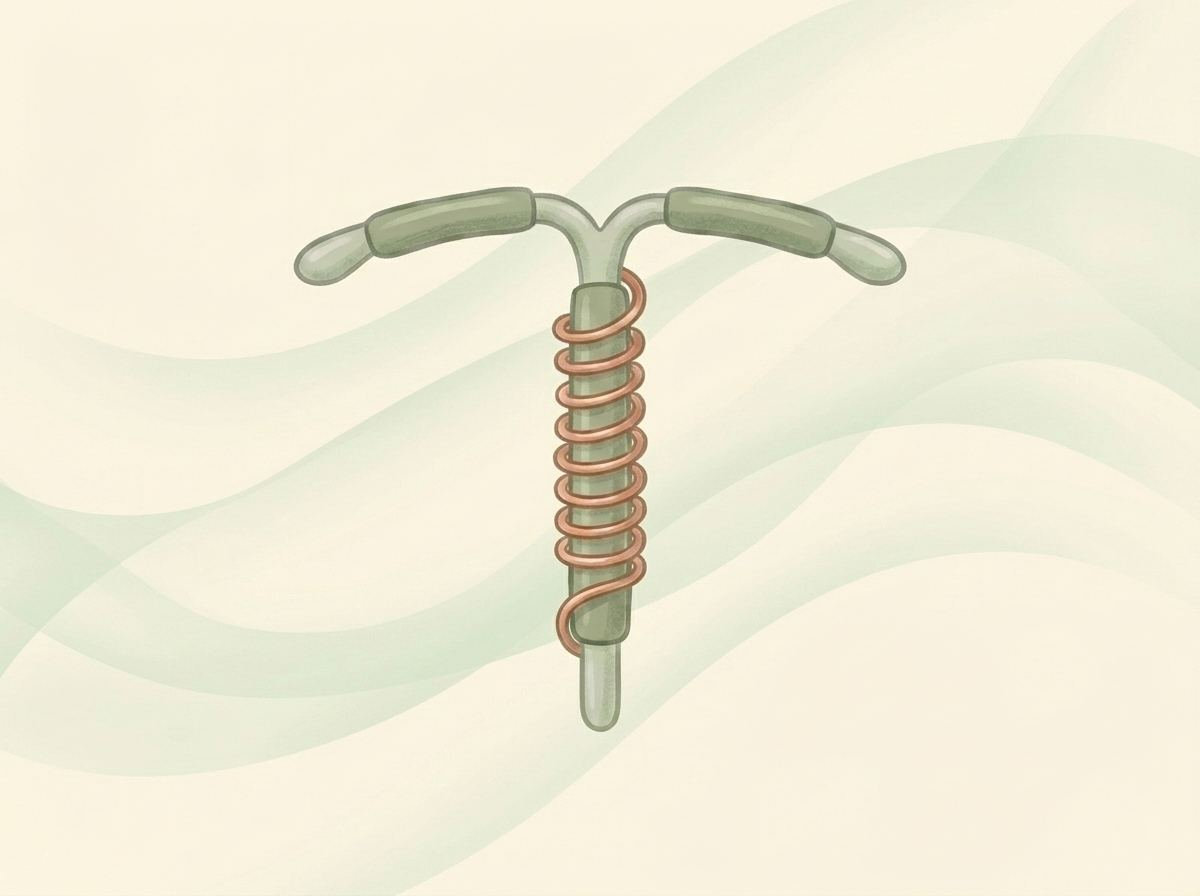
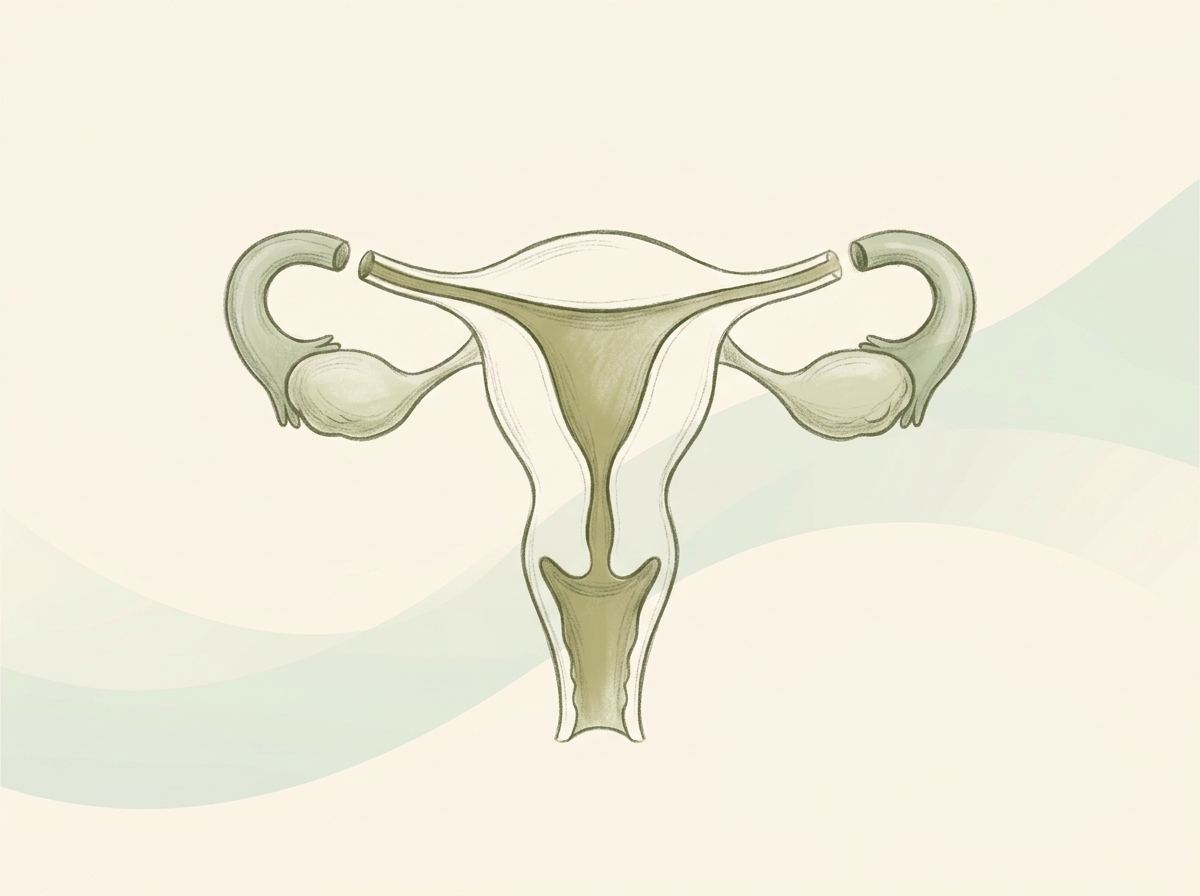
The copper IUD is a small, T-shaped device a clinician places inside the uterus. It releases copper, which interferes with sperm movement and fertilization and may prevent implantation. It is a highly effective reversible contraceptive, with a typical-use failure rate under 1%.
How to use it
A trained clinician inserts the IUD during an in-clinic procedure. FDA-approved copper IUDs include ParaGard, approved for up to 10 years, and Miudella, approved in 2025 for up to 3 years. The IUD can be removed at any time, and pregnancy is possible as soon as it is out. It also works as emergency contraception if inserted within five days of unprotected sex, with a pregnancy rate of about 0.1% according to a systematic review of over 8,500 insertions.
Copper IUD vs hormonal IUD
The copper IUD contains no hormones. Hormonal IUDs release levonorgestrel, a progestin. Both types are over 99% effective at preventing pregnancy.
The main difference is how they affect periods. With the copper IUD, heavy or prolonged bleeding and spotting are common in the first 3 to 6 months and usually ease with time. With a hormonal IUD, bleeding usually gets lighter over time, and many users have only light periods or none at all. Acne and breast pain are listed side effects of hormonal IUDs.
If you need to avoid hormones for medical reasons, the copper IUD is an option. For example, under the CDC’s medical eligibility criteria, current breast cancer is Category 1 (no restriction) for the copper IUD and Category 4 (unacceptable risk) for hormonal IUDs.
Side effects and cautions
Miudella’s FDA label carries a boxed warning: improper insertion increases the risk of complications. Miudella is available only through a restricted program (the Miudella REMS) that makes sure clinicians are trained on proper insertion before they first place it.
Where to get it
The FDA label limits insertion and removal to healthcare providers trained in the procedure, so you need an in-person visit; telehealth alone cannot provide one. Marketplace health plans must cover FDA-approved contraception without a copayment. You can search our provider directory for clinics near you that offer copper IUD insertion.
Adapting to the copper IUD
Changes in bleeding are most common in the first 3 to 6 months and usually decrease with continued use. In one prospective study of new copper IUD users, bleeding decreased approximately 23% from month 1 to month 6 after insertion, and cramping eased over the same period (Sanders et al., PLOS ONE 2018). Anemia is a listed side effect in the FDA label, so tell your clinician if bleeding stays heavy. CDC guidance lists a 5 to 7 day course of NSAID pain relievers as a treatment option for heavy or prolonged bleeding.